The Scale of the Earth
📐 Measuring the Earth
Question
How big is the Earth, really - and how does that scale compare to the things we see?
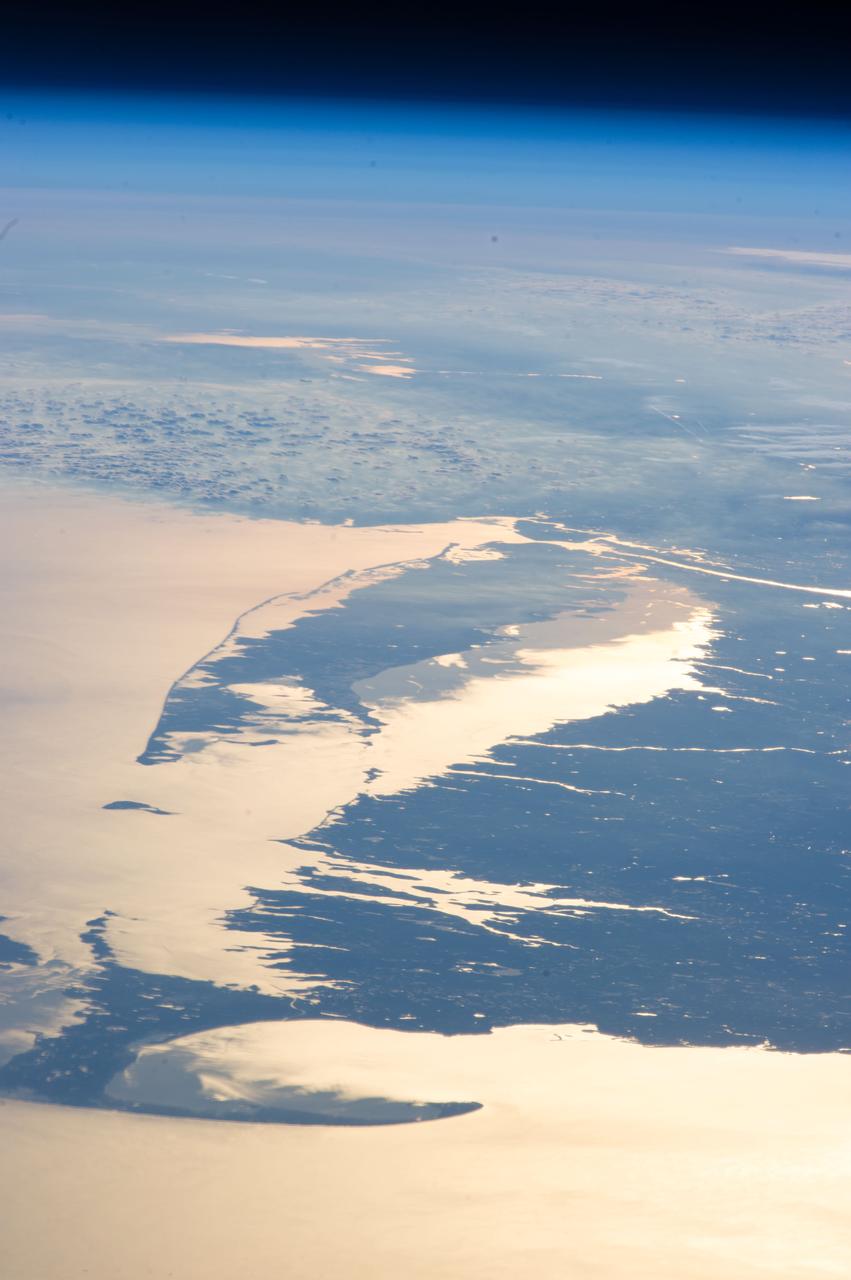
The Earth is 12,742 km across and 40,075 km around. That is so large that its surface looks flat to you: the drop of the ground below a straight sightline is only about 8 cm over 1 km, and about 8 m over 10 km. The atmosphere is thin by comparison - the bulk of it is within ~100 km, about 1.5% of the Earth's radius. The Moon is 384,400 km away (30 Earths end to end), and the Sun is 149.6 million km away (about 11,700 Earths).
The math
The curvature drop below a tangent sightline is h ≈ d²/(2R), with R = 6,371 km. For d = 1 km: h ≈ 1000²/(2×6,371,000) m ≈ 0.08 m (8 cm). For d = 10 km: h ≈ 7.8 m. For d = 1 mile (1.609 km): h ≈ 0.20 m (8 inches) - the '8 inches per mile squared' rule.
Why it matters
The reason the Earth looks flat is scale: you are about 1.7 million times smaller than the planet's radius. No one has ever stood on the 'edge' because there is no edge - the surface curves away continuously, and the curvature is too gentle to feel at human scale.