The Atmosphere Is a Gradient, Not a Layer
📐 Measuring the Earth
Question
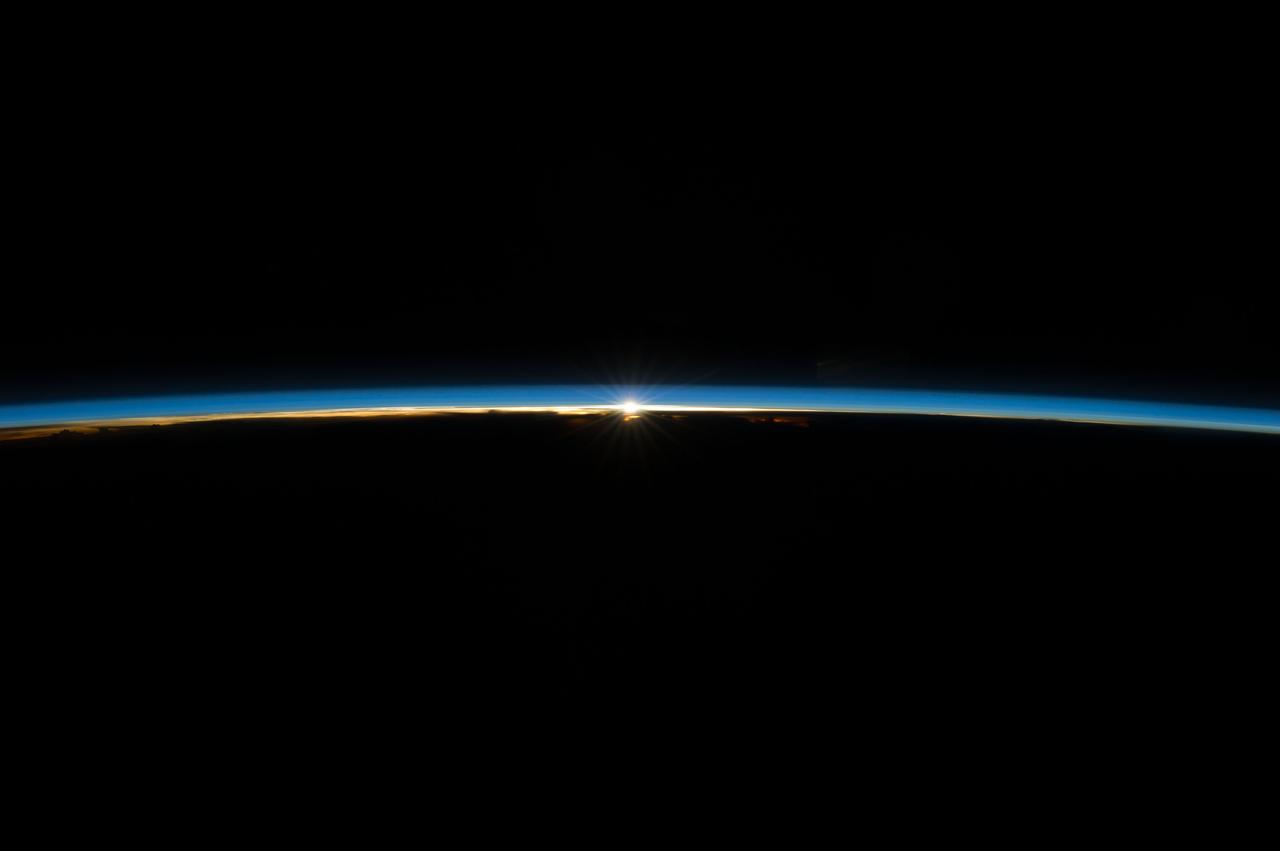
Where does the atmosphere end - is there a hard edge of space?
There is no hard edge. The atmosphere is a gradient: air density falls smoothly and exponentially with altitude. There is no line where 'air stops' - it just gets thinner and thinner until it blends into space. The 'edge of space' at 100 km (the Kármán line) is a convention agreed by the aerospace community, not a physical boundary. The balance that holds the atmosphere in place is hydrostatic equilibrium: gravity pulls the gas down, and the pressure gradient pushes it up; the two cancel at every height.
The math
Density falls roughly exponentially: ρ ≈ ρ₀ · e^(−h/H), with scale height H ≈ 8.5 km. The pressure falls by a factor of e (2.7) every 8.5 km - roughly halving every 6 km. At 100 km the air is about a million times thinner than at sea level - not zero, but vanishingly thin.
Why it matters
'The atmosphere ends at X km' is a category error - it is a gradient, not a layer with a lid. This is why high-altitude balloons can float for hours in the 'edge of space' (the air is still there, just thin), and why the sky is blue (scattering in the gradient) rather than a hard dome.