Robert H. Goddard
1882-1945
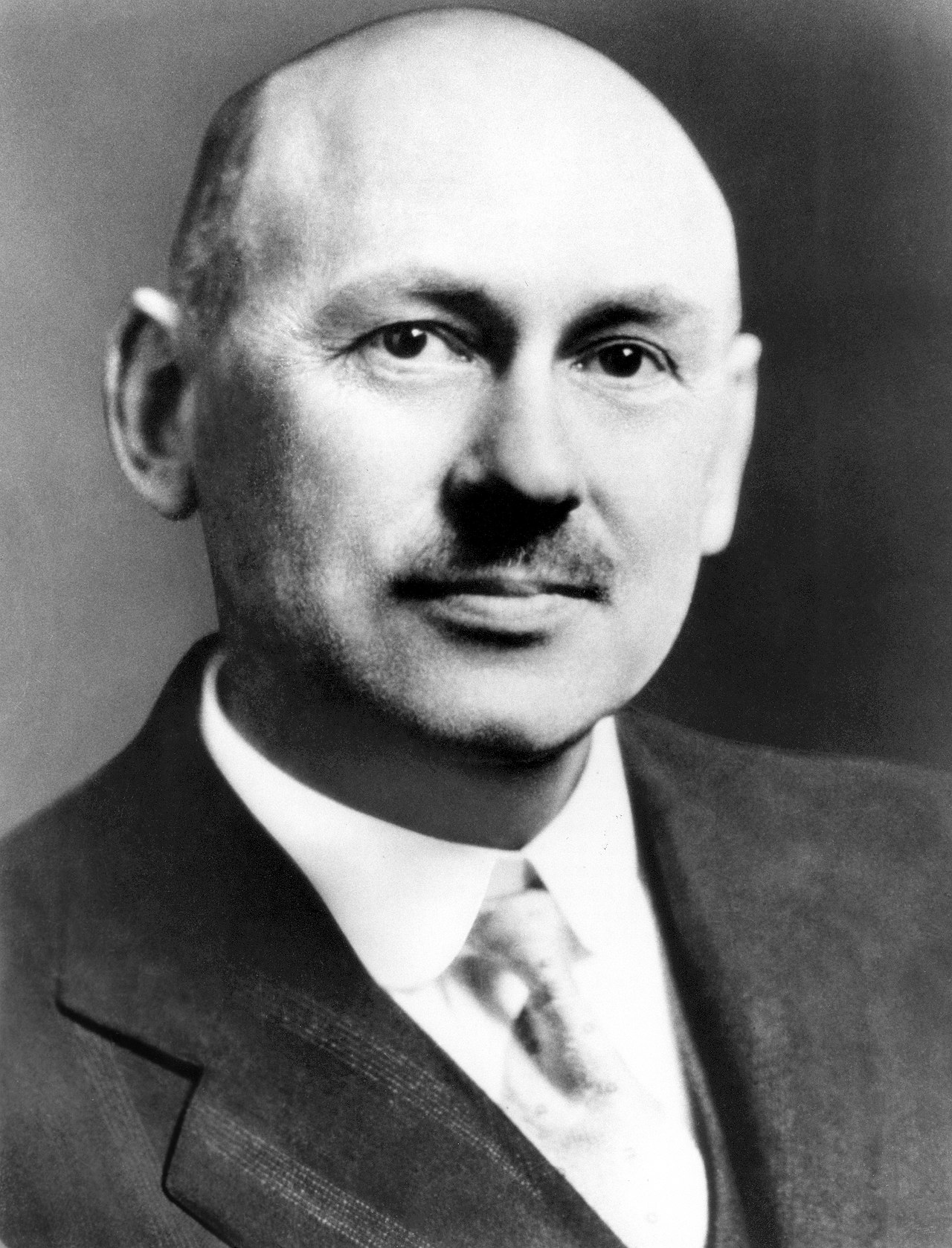
Who
American physicist who built and flew the world's first liquid-fueled rocket - 16 March 1926, a field in Auburn, Massachusetts. It flew for two and a half seconds, rose about 12 m and came down 56 m away. Everything since is that flight's descendant.
Why it matters
The newspapers had not waited for the flight to be unkind: the New York Times had ridiculed his 1920 paper in 1920 for suggesting a rocket could work in vacuum, mocking the very idea of reaching the Moon. Goddard kept going - 34 launches between 1926 and 1941, up to 2.6 km altitude and speeds over 800 km/h - holding patent after patent on the things that actually make large rockets steerable and efficient: the De Laval nozzle, gyroscopic guidance, pump-fed liquid engines. He died in 1945, largely unpublished and uncelebrated. On 17 July 1969, the day before Apollo 11 launched, the New York Times printed a formal retraction of its 1920 article: further research had established that rockets could indeed fly to the Moon. Most readers read it as an epitaph.
Lineage
Tsiolkovsky wrote the theory; Goddard flew the machine. His hardware lineage runs through the German work he patented, into the missiles of the war - and after 1945, under contract review that used his patents without credit, into the American moon rocket he never lived to see.